

A low quotation, a persuasive sales presentation and an urgent delivery promise can make a new supplier appear commercially attractive. None of them confirms who controls the business, whether it can fulfil its obligations, or whether an undisclosed dispute could interrupt your operations. A vendor integrity assessment gives decision-makers verified facts before procurement, finance or management commits the organisation to a relationship that may carry financial, legal and reputational consequences.
For Malaysian businesses, supplier and partner risk is rarely limited to price. A vendor may handle customer information, enter a site, supply safety-critical materials, represent your brand to clients, or receive advance payment. When the appointment is wrong, the resulting loss can include fraud, service disruption, poor-quality work, regulatory exposure and difficult recovery action. Proper due diligence is therefore a commercial control, not a procurement formality.
What a vendor integrity assessment should establish
The purpose is not to eliminate every risk or reject every vendor with a complicated history. It is to establish a clear, proportionate view of the entity and the people behind it, so that approval is based on evidence rather than assurances. The depth of screening should reflect the value, duration and sensitivity of the proposed engagement.
At a minimum, an assessment should confirm that the business exists, is correctly represented and has the authority to enter into the proposed arrangement. This includes verifying registered business details, operating address, nature of business and, where relevant, licences or sector-specific approvals. A mismatch between the company name on the quotation, the bank account supplied for payment and the entity named in a contract deserves explanation before funds are released.
Ownership and control require equal attention. Directors, shareholders, beneficial owners and authorised signatories can reveal whether a vendor is genuinely independent, connected to an employee or decision-maker, or controlled by an individual whose background creates a material concern. Undeclared conflicts of interest are especially serious where the vendor was introduced through an internal contact or receives repeated work without a transparent selection process.
Legal and financial-probity checks add another layer of protection. Depending on the engagement and lawful access to relevant sources, these may identify civil litigation, industrial court matters, regulatory blacklist findings, insolvency indicators, adverse media or other evidence of past conduct that could affect reliability. A case record alone does not prove wrongdoing. Its relevance depends on the nature of the claim, its status, the people involved and the vendor’s response. The aim is to identify facts requiring clarification, not to make assumptions from a search result.
The risks hidden behind a polished vendor profile
Vendor fraud does not always begin with a false company. It may involve a genuine business that exaggerates capacity, conceals a related-party relationship, substitutes materials after winning a contract, or uses a different bank account at the point of payment. A basic registration search may confirm the company exists while leaving these operational risks unexamined.
Consider a contractor appointed to work at multiple branches. If its directors, experience and insurance claims are not checked, the organisation may discover too late that the contractor lacks the stated capability or has a history of unresolved disputes. For an IT provider, the concern may be access to commercially sensitive systems and customer data. For a transport supplier, it may be safety performance, asset ownership and continuity of service. The assessment must follow the actual exposure created by the role.
There is also a reputational dimension. Customers and regulators may associate your organisation with the conduct of the businesses you choose to engage. A vendor implicated in deceptive practices, serious misconduct or a high-profile dispute can damage trust even if your own operations were not directly involved. Early verification allows management to ask precise questions, document its reasoning and impose safeguards where engagement remains commercially justified.
Building a proportionate screening process
A reliable process begins before the vendor submits paperwork. Procurement, finance, operations and compliance should agree which vendor categories require enhanced review. A one-off purchase of low-value office supplies does not justify the same assessment as a long-term logistics contract, a joint venture, a security provider or a vendor handling personal information.
Useful risk factors include contract value, access to premises or systems, use of subcontractors, regulatory sensitivity, payment structure, geographic exposure and the vendor’s influence over customers or public-facing services. High-risk engagements should not be rushed simply because a project deadline is tight. Urgency is frequently the condition that weakens normal controls.
The assessment should then follow a documented scope. This normally combines corporate verification with checks on relevant directors, owners and key representatives. The information requested from the vendor should be compared carefully against independent records and against the proposed contract. Small inconsistencies can be administrative errors, but repeated inconsistencies may indicate poor governance or deliberate misrepresentation.
Where findings require follow-up, give the vendor a fair opportunity to explain. A civil claim may have been settled, a change in address may have a legitimate reason, or a director may no longer be involved in day-to-day operations. Record the explanation, supporting evidence and final decision. This produces an audit trail showing that the organisation acted reasonably, consistently and on verified information.
What to verify before vendor approval
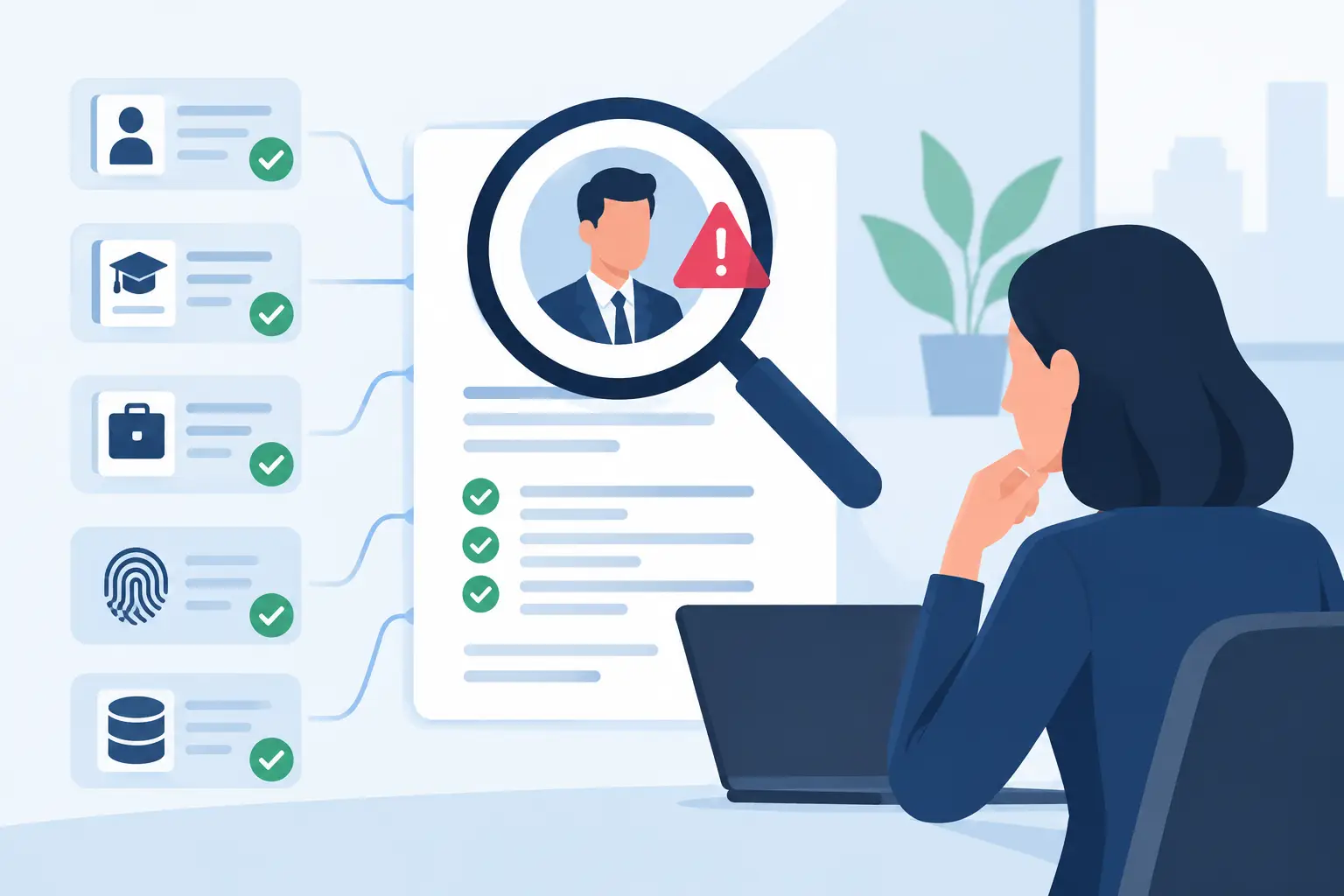
The precise scope will vary, but a higher-risk vendor review commonly examines the following areas:
- Corporate identity, registration details, business activities and current operating information.
- Directorships, ownership interests, beneficial control and authorised persons.
- Civil litigation, industrial court matters and other relevant legal or regulatory indicators.
- Financial-probity concerns, sanctions or blacklist exposure where legally available and relevant.
- Qualifications, licences, references, capability claims and prior performance where the service requires them.
- Conflicts of interest, related-party connections and payment-account anomalies.
Not every finding should result in automatic rejection. A long-established company may have historical litigation that is typical for its industry, while a newer vendor with no adverse records may still lack the capacity to support a major contract. Decision-makers should weigh the evidence against the service being purchased and determine whether controls such as staged payments, insurance requirements, tighter contractual warranties, site supervision or more frequent reviews are appropriate.
Confidential, lawful checks protect both parties
Vendor screening involves sensitive business and personal information. It must be handled confidentially, for a legitimate business purpose and through lawful processes. Over-collecting information creates unnecessary privacy and data-handling risk, while informal internet searches can produce inaccurate or outdated claims that are difficult to verify.
A professional assessment separates evidence from rumour. It identifies the source, clarifies limitations and presents findings in a format that supports a defensible decision. This is particularly valuable when procurement teams need to justify an approval, a conditional appointment or a decision not to proceed to senior management, auditors or other stakeholders.
Confidentiality also protects the vendor. A fair review should limit access to those with a genuine need to know and avoid circulating unverified allegations. When an issue is found, it should be assessed objectively against the agreed risk criteria, not used as a reason for speculation.
Screening should continue after appointment
Approval is a point in time; vendor risk can change during the contract. Ownership may change, a key licence may lapse, litigation may arise, or the supplier’s financial position may deteriorate. Organisations should set review intervals for critical vendors and define events that trigger a fresh assessment, such as a contract renewal, unusual payment request, serious service failure, change in directors or expansion into a more sensitive scope of work.
Post-appointment monitoring does not need to become burdensome. For many vendors, an annual confirmation of key details and a targeted review of material changes is sufficient. Higher-risk relationships require closer oversight. The practical objective is to detect changes before they become losses, disputes or operational emergencies.
Angel Checks supports organisations that need accurate, confidential and decision-ready intelligence before appointing vendors, business partners or joint-venture parties. A structured review can help procurement and management teams move forward with clearer evidence, appropriate safeguards and a documented basis for trust.
The strongest vendor relationships are not built on suspicion. They are built on facts that have been checked before money, access and reputation are placed in someone else’s hands.









Leave A Comment